Matched Blood Remains Essential
What can medicine do when compatible red cells cannot be obtained in time, or when transfusion does not restore oxygen delivery as expected?
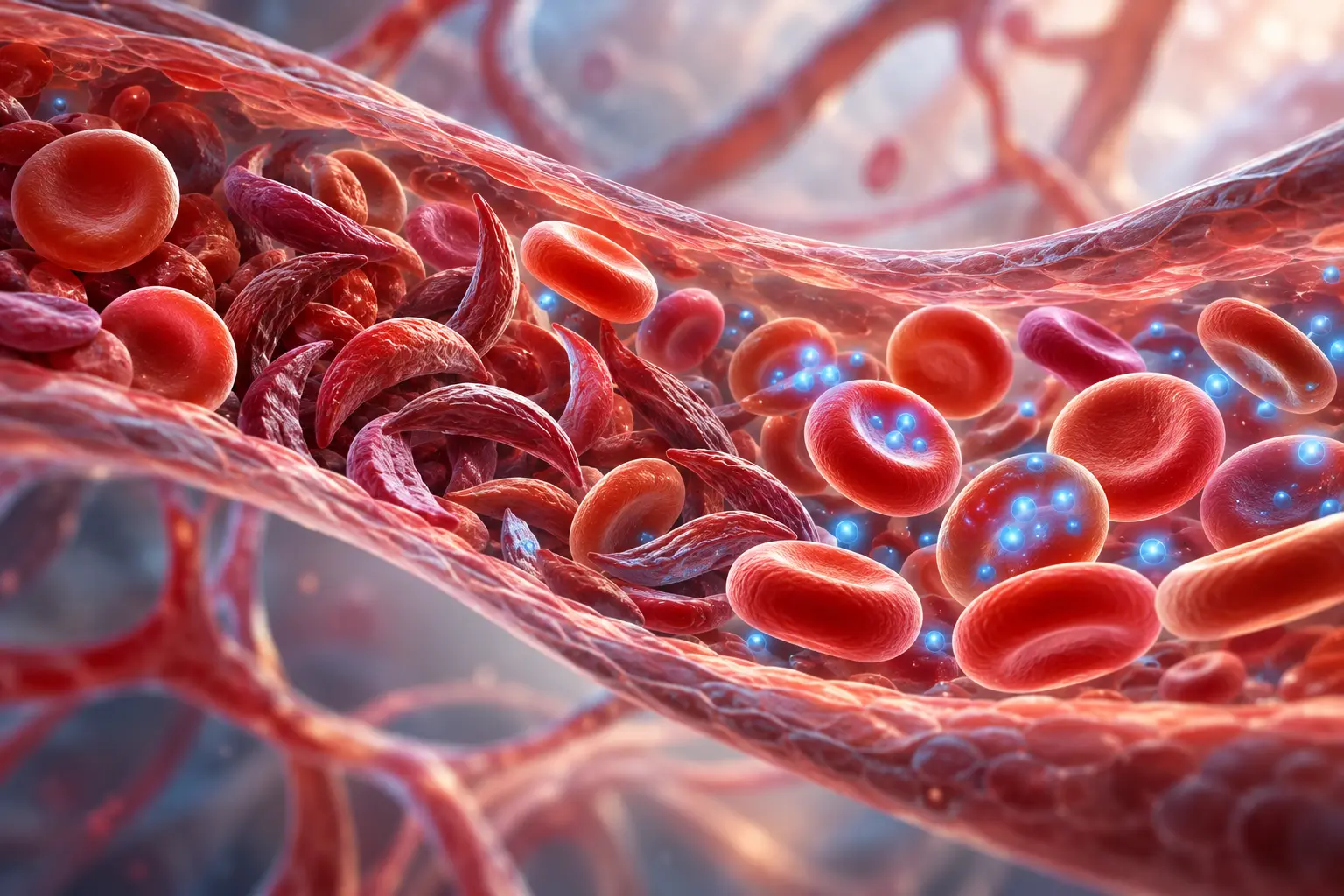
The current access gap
NHS Blood and Transplant reports that the NHS can currently meet only around half of the blood demand for patients with sickle cell who rely on regular transfusions. More than 19,000 people are living with sickle cell disorder in England, and NHSBT estimates that at least 16,000 additional Black-heritage donors are needed.
This is not simply a shortage of total blood units. Many patients need red cells matched beyond ABO and RhD. Donors of Black heritage are more likely to carry the Ro subtype needed by many patients with sickle cell disorder.
Simple transfusion and red-cell exchange are not the same intervention
Adds donor red cells. It can raise haemoglobin and oxygen-carrying capacity, but also increases donor-cell exposure and may add iron over repeated treatment.
Removes sickled red cells while replacing them with donor cells. It can reduce the proportion of haemoglobin S without the same net iron loading as repeated simple transfusion, but requires compatible units and specialist infrastructure.
One patient described by NHSBT receives exchange every seven weeks using seven to eight donated units per procedure. This illustrates both the value of the treatment and its continuing dependence on matched donor supply.
Alloimmunization and haemolytic complications
Exposure to donor red-cell antigens can lead a patient to form antibodies. This alloimmunization may make future matching more difficult. NHSBT has reported that approximately 17% of adults with sickle cell disorder are alloimmunized.
Delayed haemolytic transfusion reactions and hyperhaemolysis are particularly serious complications. In hyperhaemolysis, both transfused and the patient's own red cells may be destroyed, and haemoglobin can fall below the pre-transfusion level.
Why haemoglobin concentration is not the whole answer
A rise in haemoglobin does not by itself prove that tissue oxygen delivery has been restored. Effective delivery also depends on circulation, microvascular flow, oxygen loading and unloading, red-cell deformability, vascular regulation and the patient's metabolic demand.
When haemolysis, vaso-occlusion, inflammation or microvascular dysfunction continues, another transfusion may not correct every cause of impaired oxygen delivery. In selected immune-mediated complications it may also expose the patient to additional donor-cell antigens and additional cells that can become targets of haemolysis.
This is a research question, not a claim that any currently unproven product can replace matched donor blood.