Research, evidence and material developments relevant to BHOC / HBOC, donor-blood logistics, emergency transfusion and tissue oxygenation through Precision Oxygen Therapeutics.
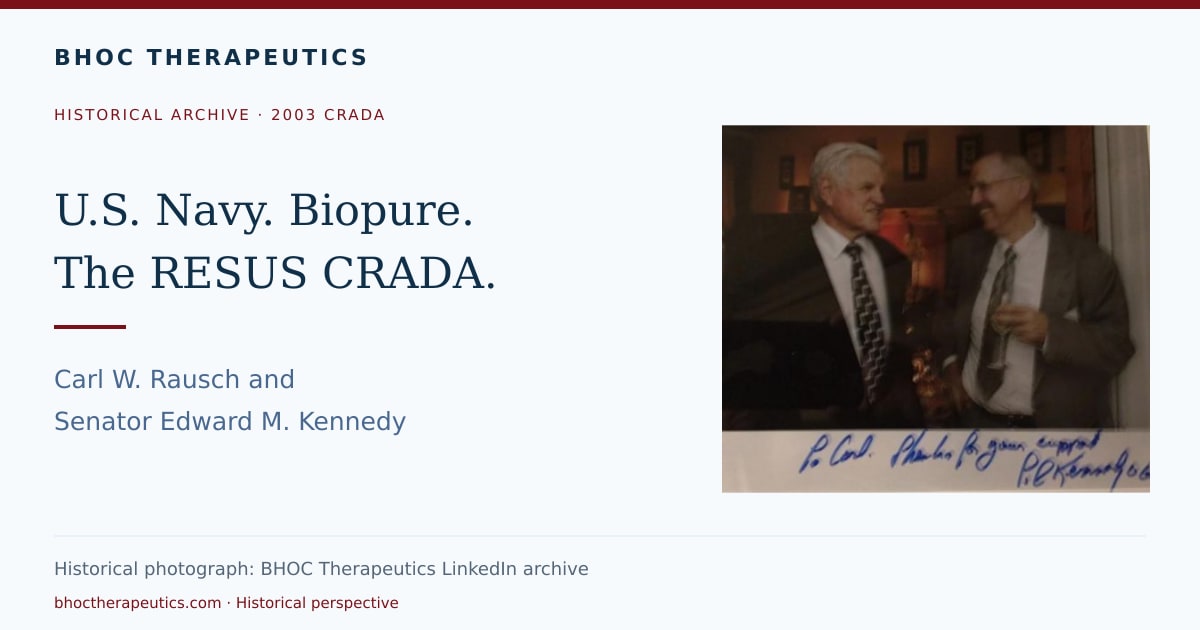
The RESUS research agreement, Senator Edward M. Kennedy and Carl W. Rausch: revisiting the people and institutions behind Biopure's oxygen-therapeutics development.
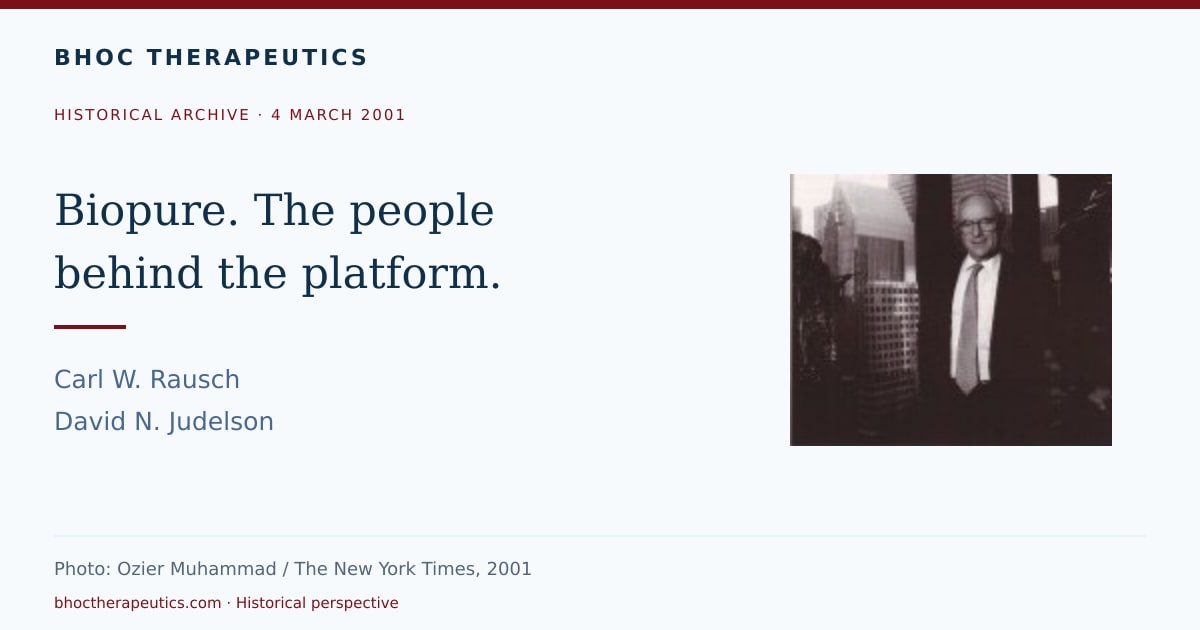
The 2001 New York Times coverage of Hemopure, Carl W. Rausch and David N. Judelson highlights the scientific, industrial and leadership work behind Biopure.
Scientific publication · Transfusion medicine · Preprint
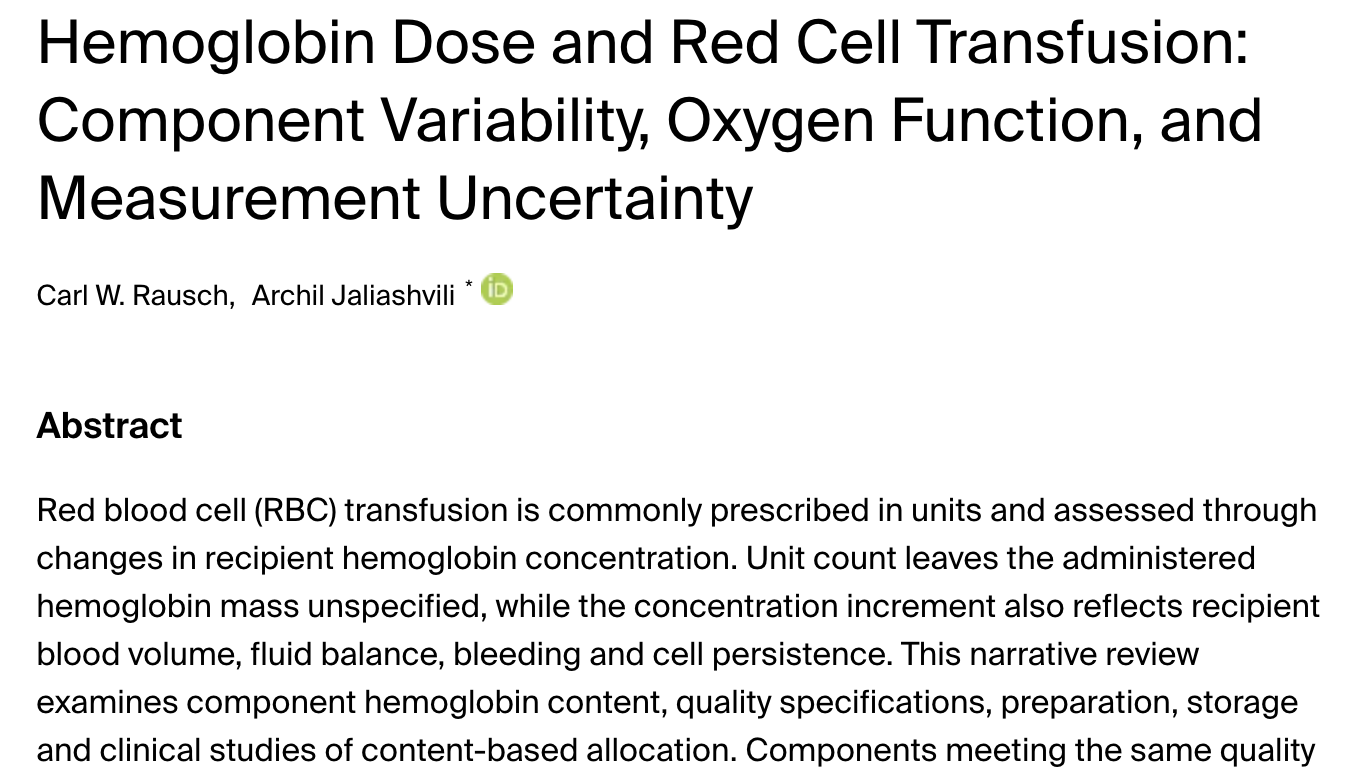
New Preprint Examines Hemoglobin Dose and Red Cell Transfusion
Carl W. Rausch and Archil Jaliashvili review component variability, oxygen function and measurement uncertainty, with thanks to the colleagues who helped prepare the manuscript.
Emergency Medicine · DARPA RAPIID · Precision Oxygen Therapeutics
Hemorrhage Control and Tissue Oxygenation
A DARPA award of up to $120 million highlights severe hemorrhage care. BHOC connects bleeding control with tissue oxygenation and small-volume oxygen support.
United States · NHTSA/FICEMS · AABB · Oxygen Therapeutics
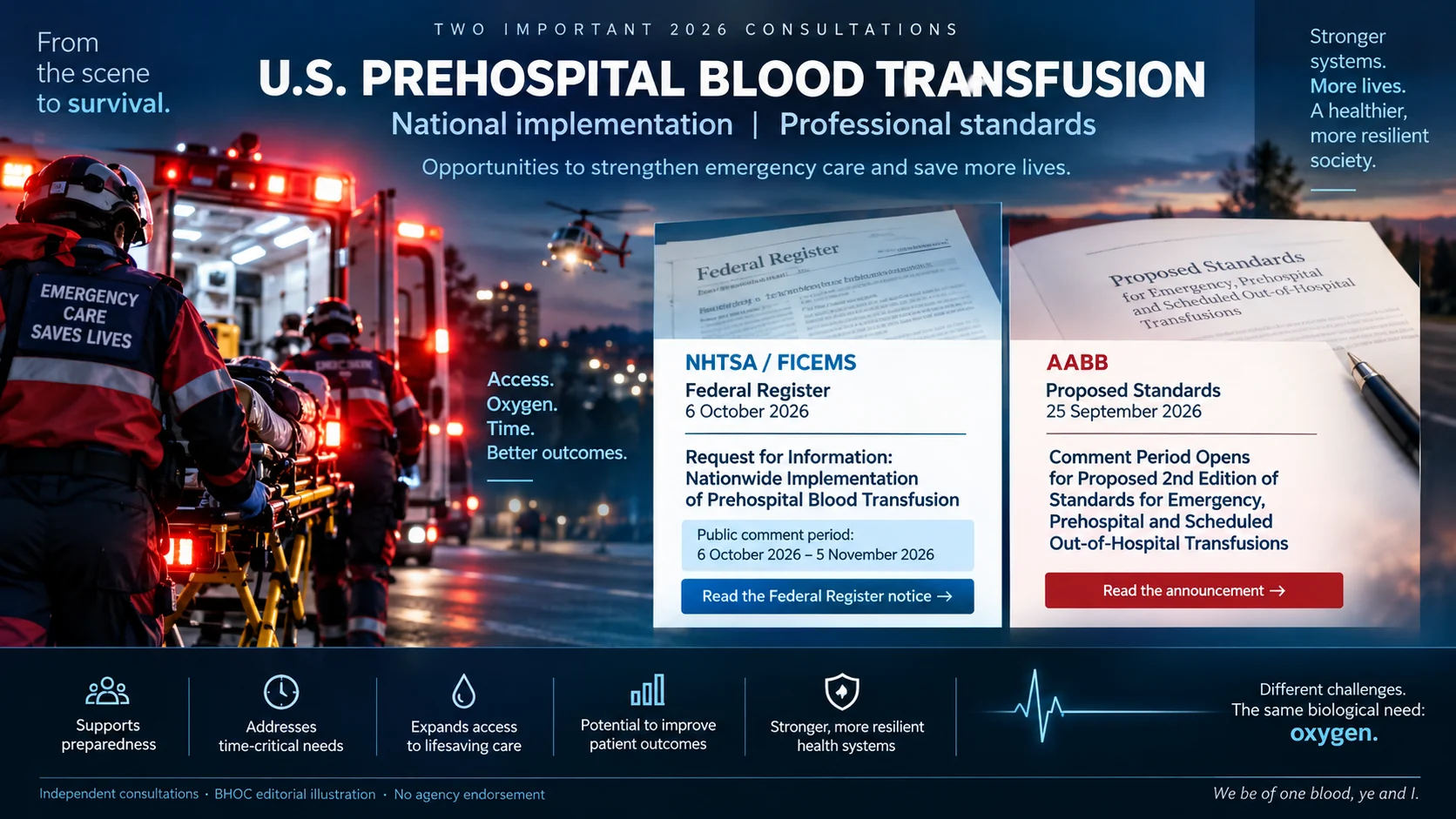
US Prehospital Blood Transfusion: NHTSA and AABB Initiatives in the Context of Precision Oxygen Therapeutics
Two independent US consultations raise a broader emergency-care question: how can perfusion, oxygen diffusion and tissue oxygenation be assessed before donor blood arrives, including in myocardial ischemia?
Independent BHOC scientific perspective · 12 October 2026
South Africa · SANBS · Blood Supply
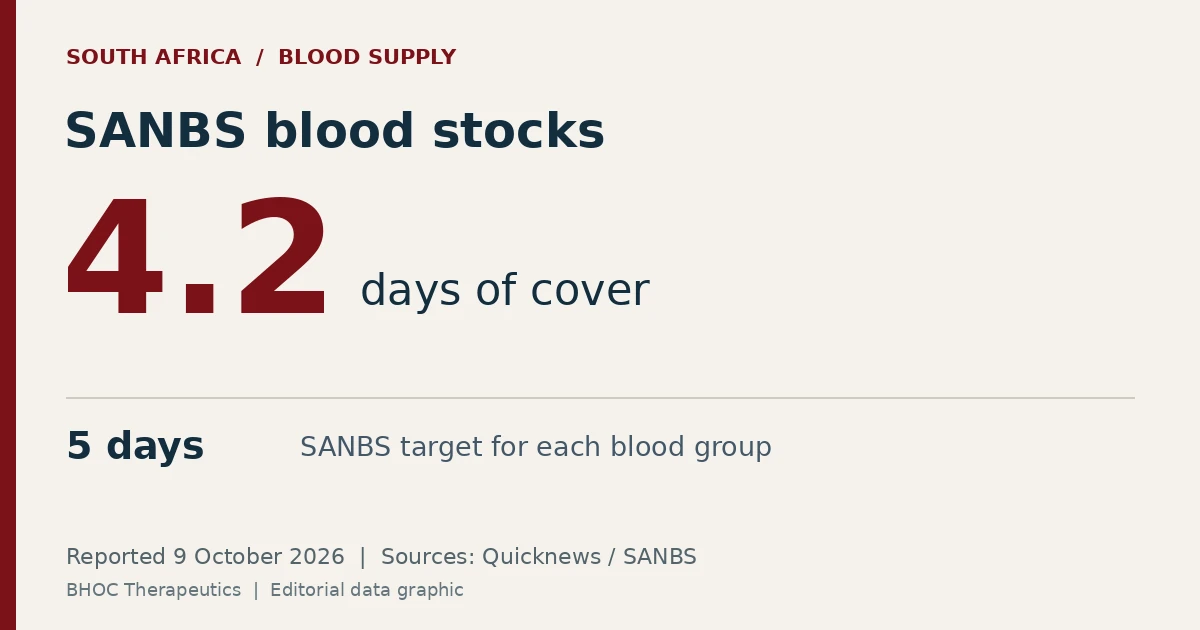
South Africa: SANBS Needs 3,500 Blood Units Daily as Stocks Fall to 4.2 Days
SANBS needs 3,500 donated units daily across eight South African provinces. A comparison of reserve targets and preparedness for longer supply disruption.
US prehospital blood model estimates 540 million dollars before additional costs
The published model estimates approximately 1.1 million blood units collected annually for about 21,000 blood-equipped EMS vehicles.
EMSWhy it mattersReadiness requires product availability and an operating system. Our separate BHOC scenario assumes 450,000 cartridges annually, with storage and dose assumptions stated explicitly.
U.S. model and illustrative planning scenario. No BHOC price or clinical equivalence is established.
NHSBT · Sickle Cell · Matched Blood
NHS can currently meet only around half of sickle cell transfusion demand
More than 19,000 people are living with sickle cell disorder in England, but closely matched red-cell supply is not keeping pace with transfusion demand.
½Why it mattersThis is a compatibility and repeat-access problem, not only a shortage of total blood units. Many patients require matching beyond ABO and RhD.
External source. Matched blood and specialist transfusion care remain essential.
WHO · Safe Blood · Health Systems
Safe Blood Is More Than Donation
WHO's 2026–2030 action plan connects donation with financing, regulation, quality systems, infrastructure and timely patient access.
WHOWhy it mattersEvery unit depends on a complete operational chain from donor recruitment and testing through storage, transport and clinical delivery.
External policy evidence. WHO has not evaluated any specific oxygen therapeutic.
Media Coverage · Hemostasis Today · Postpartum Hemorrhage
Hemostasis Today Features Archil Jaliashvili on BHOC
Hemostasis Today’s Voices section features Archil Jaliashvili’s perspective on BHOC as a potential complementary oxygen-delivery bridge in postpartum hemorrhage research.
Archil Jaliashvili / LinkedIn, as credited by Hemostasis Today.
BHOC Perspective · Precision Oxygen Therapeutics
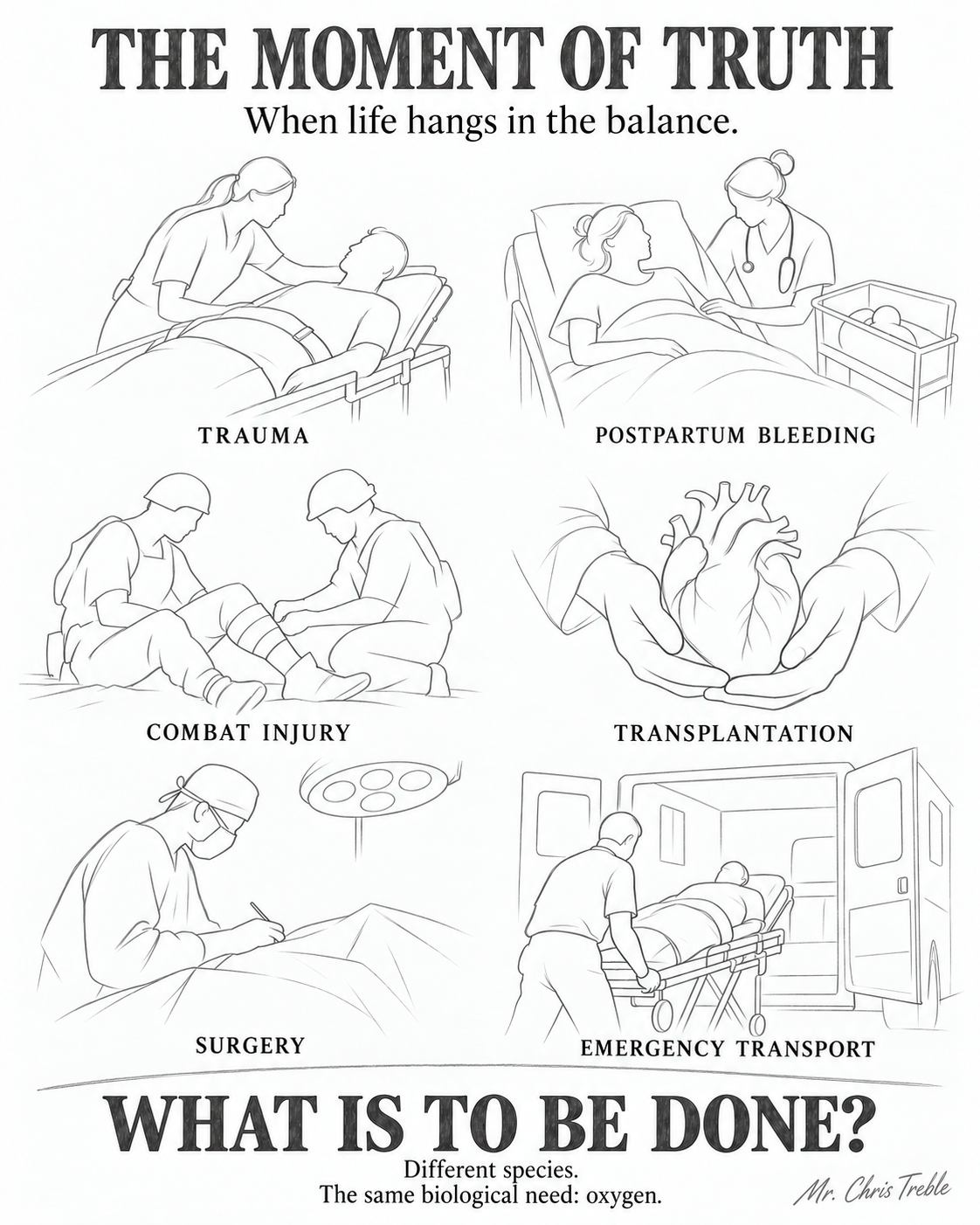
The Moment of Truth
When life hangs in the balance, oxygen must reach tissues and cells. Mr. Chris Treble reflects on this biological need and the purpose behind BHOC development of Precision Oxygen Therapeutics.
Mr. Chris Treble. Pencil illustration from the LinkedIn post.
Scientific Commentary · RBC Transfusion
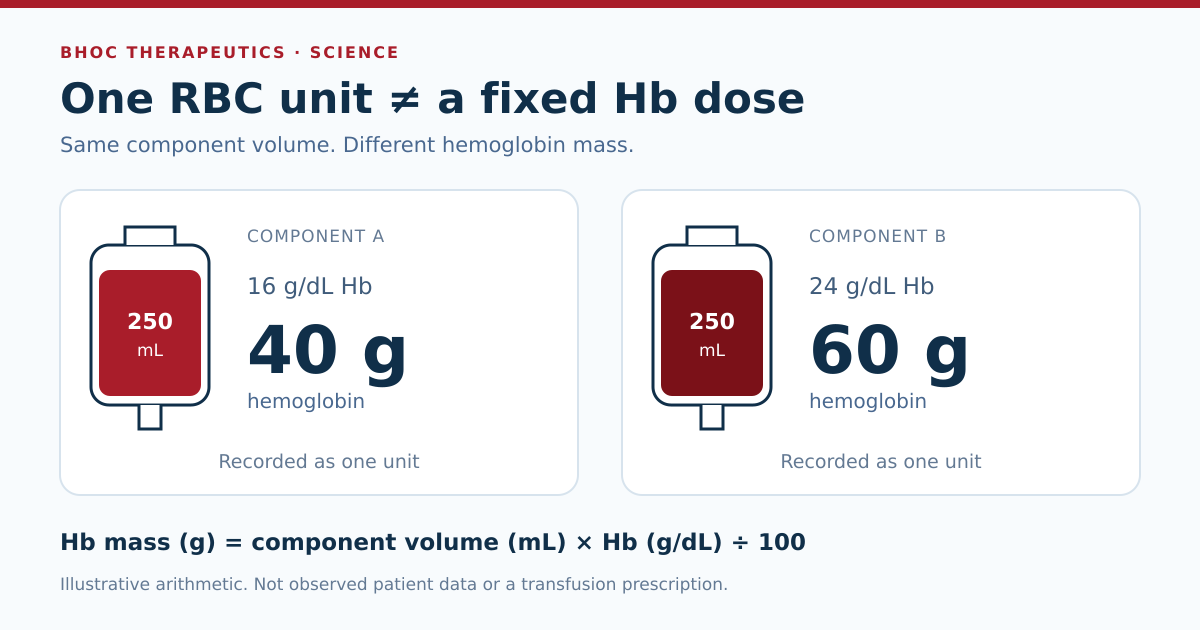
One RBC Unit Is Not a Fixed Hemoglobin Dose
What is standardized, what is actually transfused and when is the response measured? A source-linked review of RBC dose variability, component standards and the interpretation of transfusion outcomes.
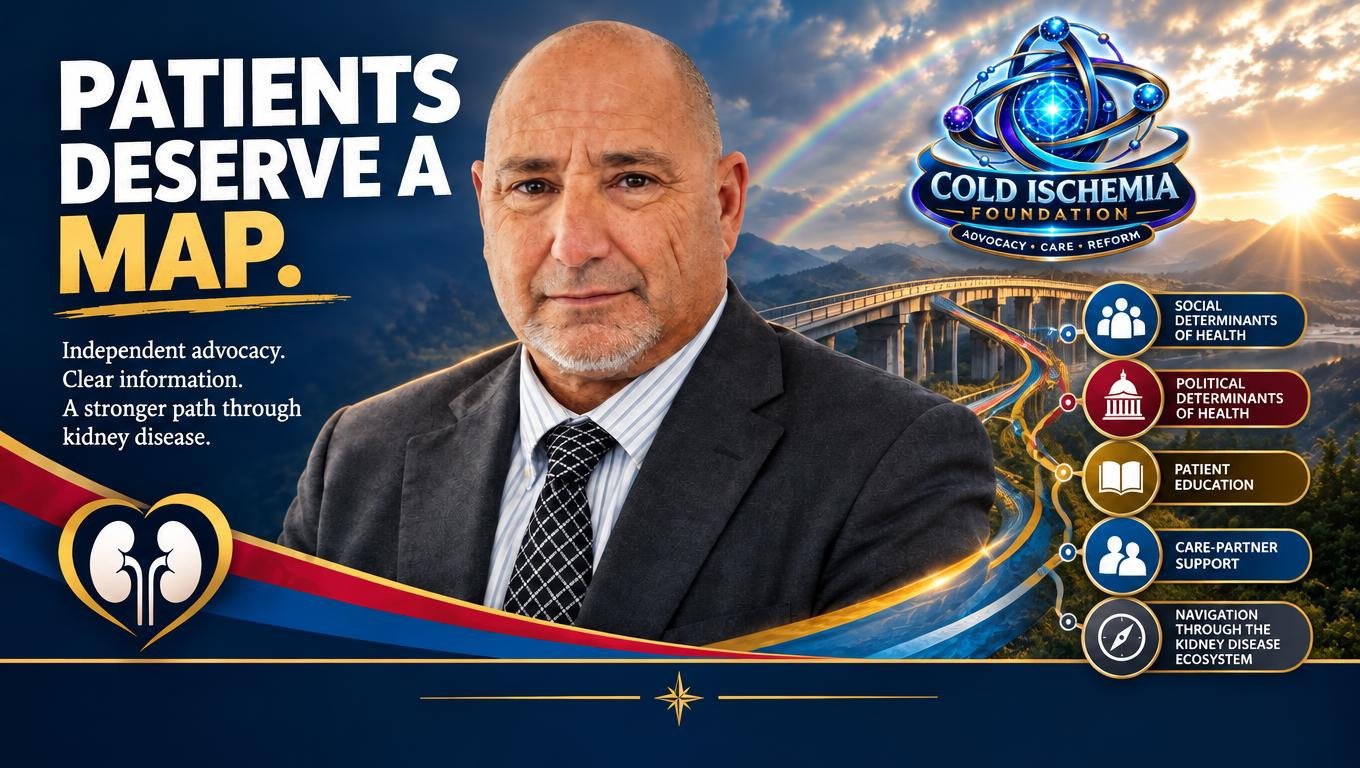
BHOC Transplant Opens Advocacy Voices & Field Notes
Listening to the people this work is for, sharing their questions and answering them openly. The new section begins with Jeff Parke and Cold Ischemia Foundation.
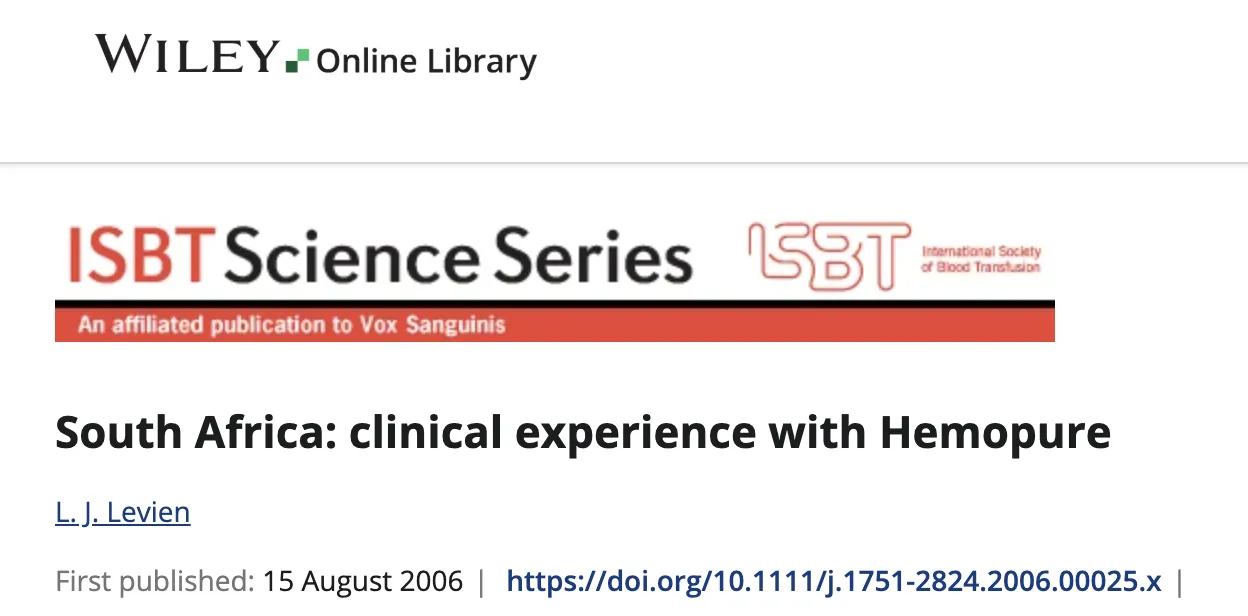
Historical Hemopure evidence; not clinical validation of BHOC.
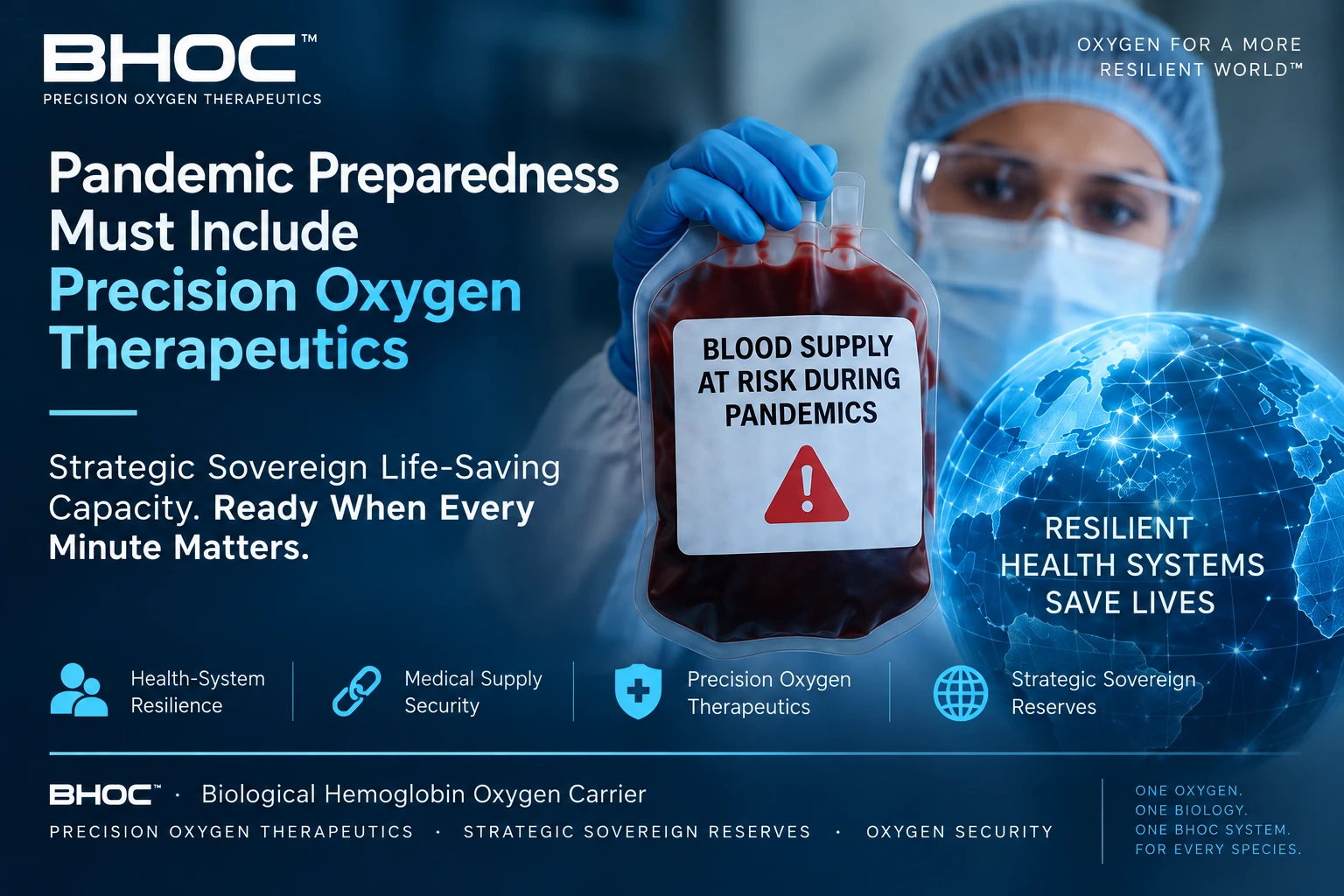
Global Health · Pandemic Preparedness · Oxygen Delivery
Pandemic Preparedness Must Include Precision Oxygen Therapeutics
WHO's renewed preparedness commitments raise a practical question: could Precision Oxygen Therapeutics based on Biological Hemoglobin Oxygen Carriers contribute to oxygen-delivery resilience and Strategic Sovereign Reserves when donor-dependent blood supply is disrupted?
Contextual policy analysis. WHO has not evaluated or endorsed BHOC.
WHO · Strategic Preparedness · Oxygen Security
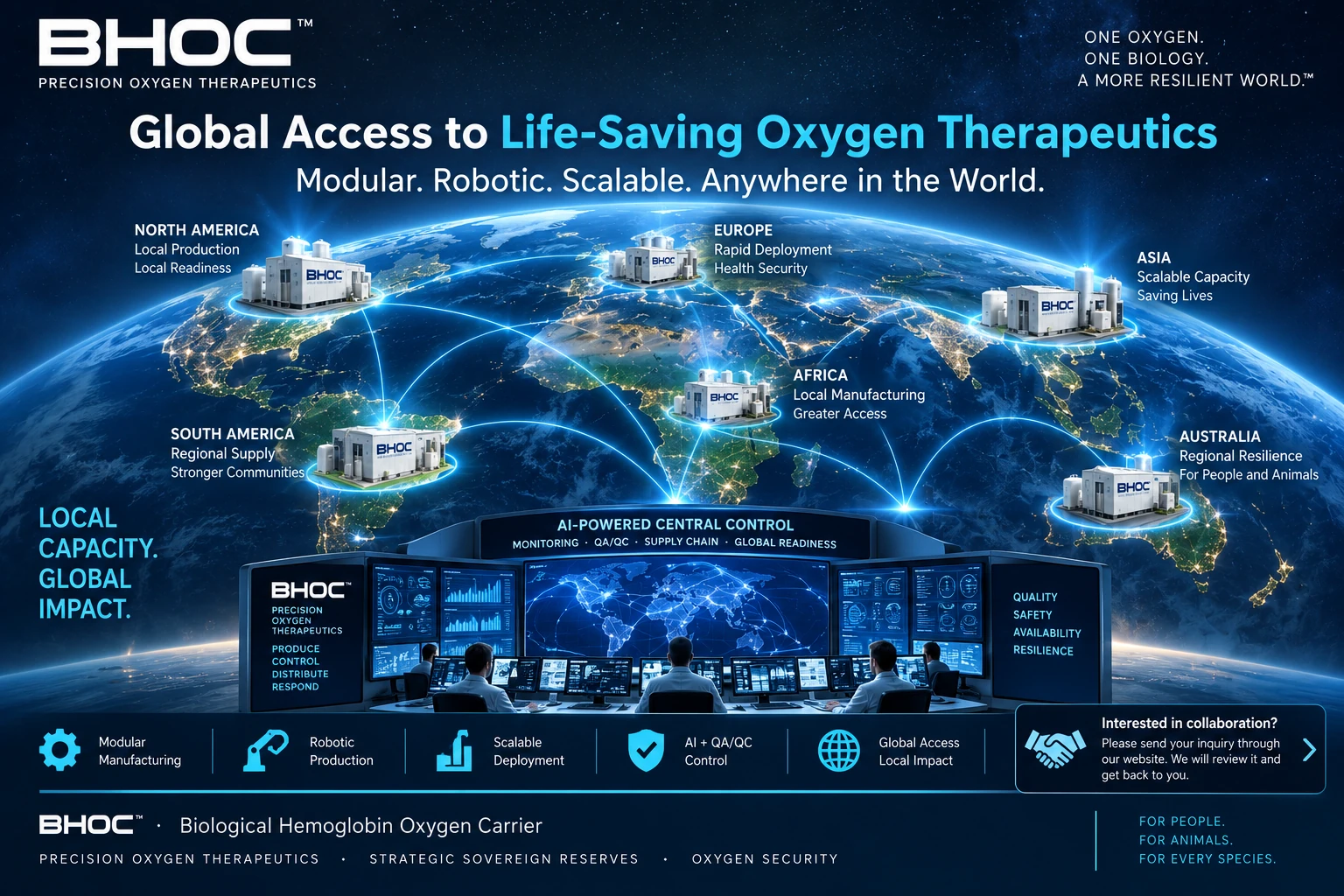
WHO Strategy Puts Strategic Stockpiles and Local Manufacturing in Focus
A new BHOC policy-evidence analysis connects WHO priorities on stockpiles, emergency supply chains and local manufacturing with the research question of oxygen-delivery resilience.
External policy evidence. The illustration shows a proposed BHOC development concept, not an operating facility or endorsed technology. It does not establish BHOC efficacy, safety or regulatory status.
Latest source note
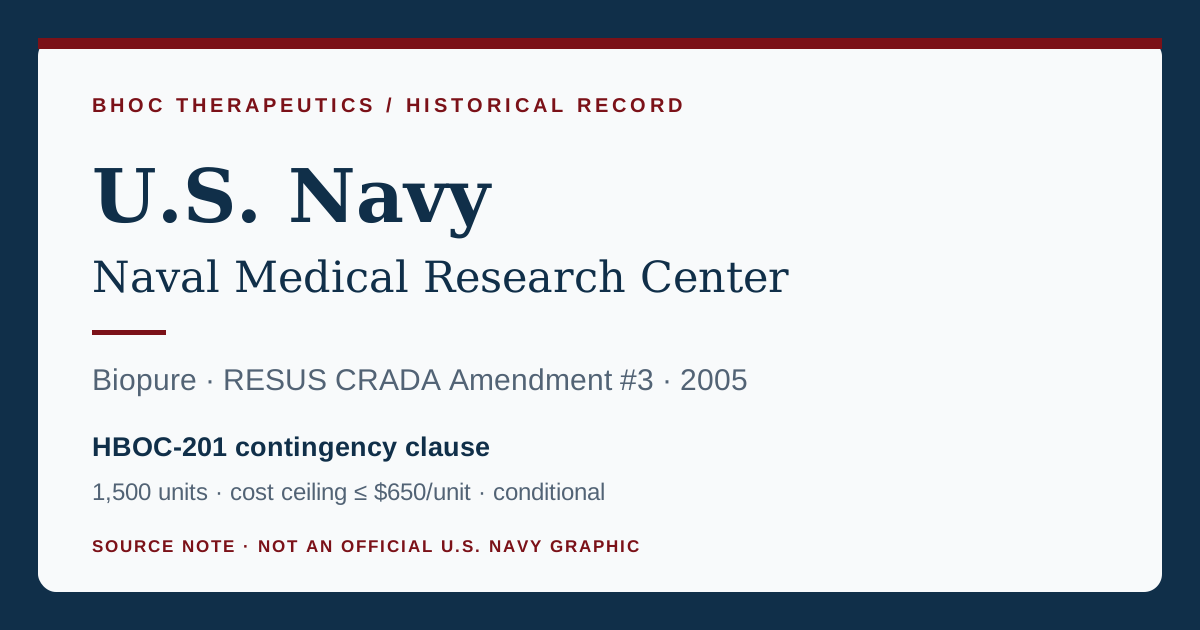
Historical source · 2005 · Naval Medical Research Center · Biopure · HBOC-201
The 2005 Navy–Biopure agreement: what 1,500 units and $650 actually meant
The RESUS amendment described a conditional defense contingency provision for HBOC-201. It specified 1,500 units and Biopure’s estimated total cost ceiling of $650 per unit if NMRC made a written request.
SECWhat the record showsA cost ceiling in a 2005 agreement. It is not a documented $650 purchase price or proof that 1,500 units were ordered or deployed.
BHOC editorial text graphic; no official U.S. Navy insignia, seal or logo.
Historical Navy–Biopure research agreement. No U.S. Navy endorsement of BHOC Therapeutics or its products is implied.
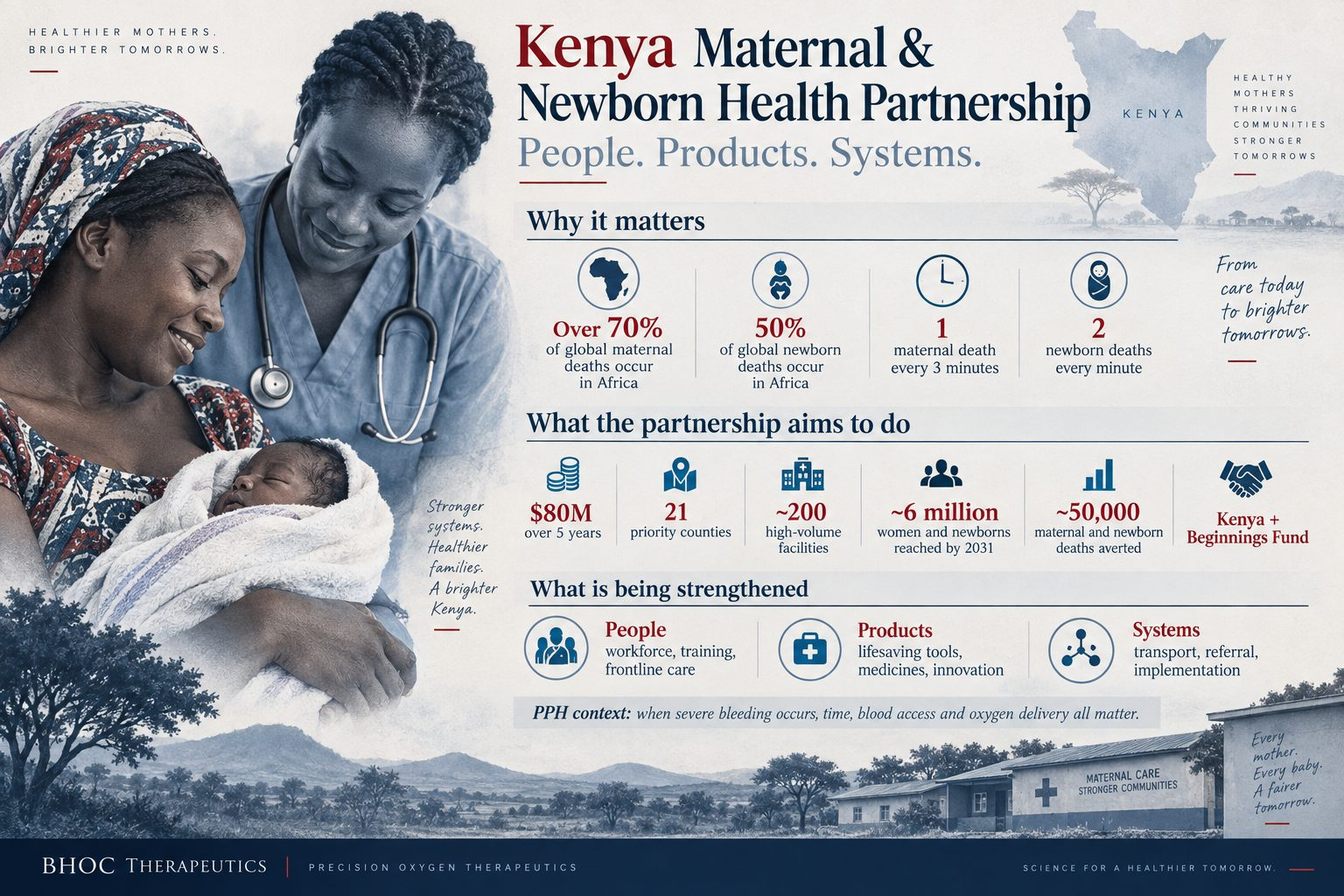
People. Products. Systems.$80M over five years · 21 priority counties · ~200 high-volume facilities.PPH context: when severe bleeding occurs, time, blood access and oxygen delivery all matter.
Maternal Health · Kenya · Africa · PPH · Beginnings Fund
Kenya and the Beginnings Fund: building maternal and newborn health systems at scale
O₂Why it mattersFor PPH, implementation is not only about the product. It is about early recognition, hemorrhage control, access to blood, referral capacity and the critical interval in which tissue oxygen delivery may become compromised.
BHOC Therapeutics editorial infographic: Kenya Maternal & Newborn Health Partnership. Visual summary of mortality context, programme scale and People + Products + Systems. Not a photograph of the Kenya–Beginnings Fund programme.
BHOC New PreprintPrecision Oxygen Therapeutics · Version 1
New preprint defines the BHOC and Precision Oxygen Therapeutics framework
Carl W. Rausch and Archil Jaliashvili propose a function-first framework that shifts the question from replacing blood toward controlled microvascular and tissue-level oxygen delivery.
O₂Why it mattersThe paper formally connects BHOC terminology with Precision Oxygen Therapeutics and a measurable research framework for oxygen binding, unloading, distribution and tissue-level delivery.
Jehovah’s Witnesses: 2026 blood decision changes from autologous blood to donor blood components
March concerned a patient’s own stored blood. September extended individual decision-making to red cells, white cells, plasma and platelets from another person’s blood, while the position on whole blood remained unchanged.
O₂Why it mattersThe change highlights a functional view of blood: red cells and hemoglobin provide oxygen transport, while other components provide different biological functions. HBOCs address the oxygen-delivery function specifically.
54 patients 23 dischargedHBOC-201 · U.S. compassionate use / Expanded Access · life-threatening anemia
Historical Clinical Record · Hemopure · HBOC-201 · Expanded Access
When blood was not an option: HBOC-201 and U.S. Expanded Access
The published clinical record documents multiple survivors after HBOC-201 was used in life-threatening anemia when conventional red-cell transfusion was unavailable or could not be used, including Jehovah’s Witness patients.
O₂Key evidenceA multicenter compassionate-use series included 54 patients with median hemoglobin 4 g/dL; 23 survived to hospital discharge. Additional case reports document survival after traumatic hemorrhage, leukemia and other critical anemia scenarios.
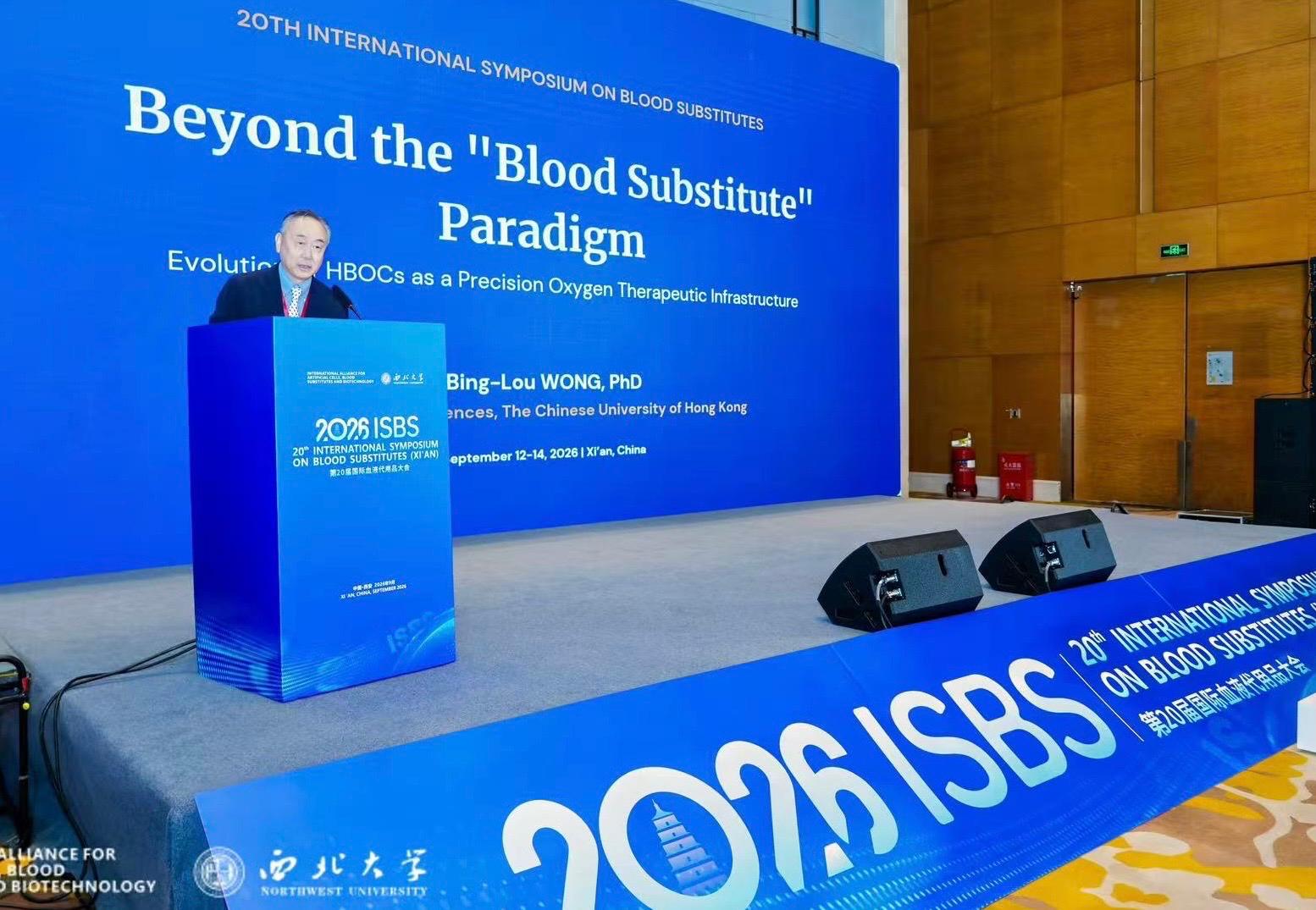
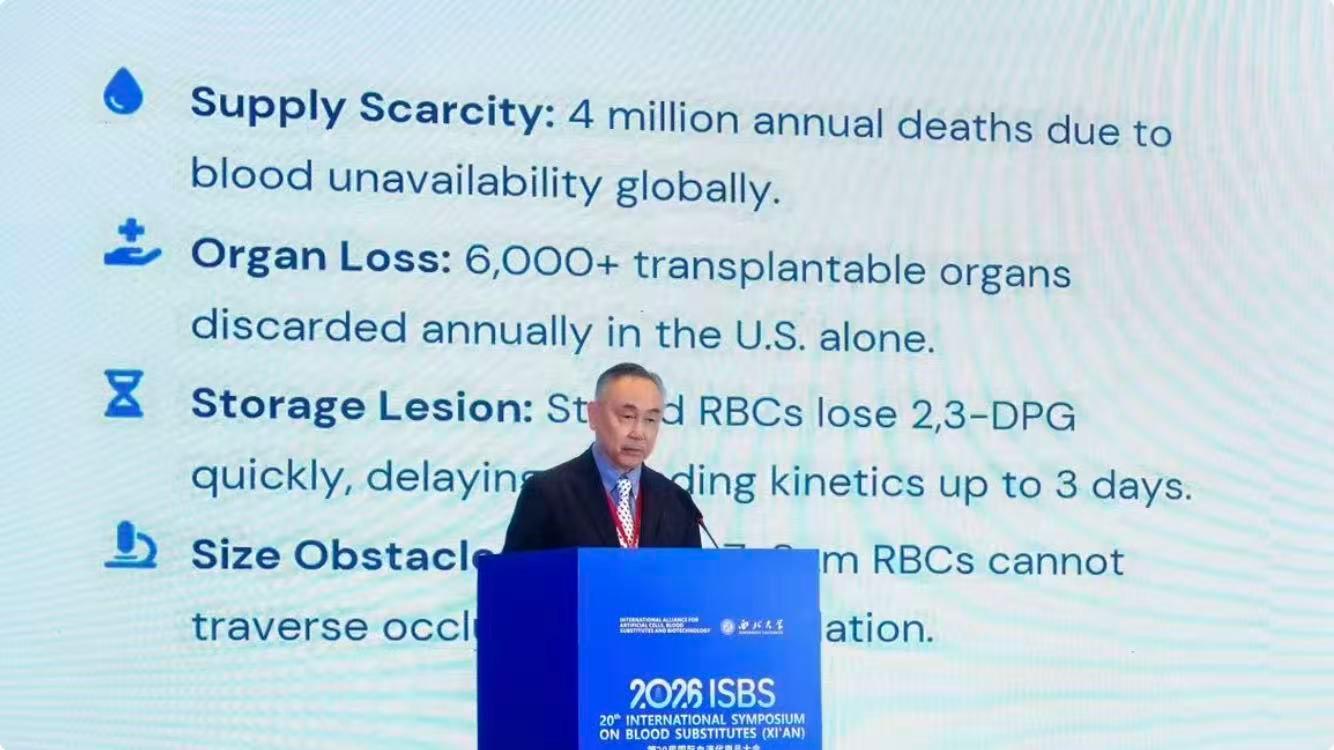
Bing-Lou Wong presents the evolution of HBOCs toward Precision Oxygen Therapeutics
At the 20th International Symposium on Blood Substitutes, Bing-Lou Wong, PhD, presented “Beyond the ‘Blood Substitute’ Paradigm: Evolution of HBOCs as a Precision Oxygen Therapeutic Infrastructure.”
O₂Why it mattersThe presentation connects decades of HBOC development with a broader focus on oxygen delivery, oxygenation and the continuing evolution of Precision Oxygen Therapeutics.
Photos: BHOC Therapeutics. Bing-Lou Wong, PhD, speaking and presenting at ISBS 2026 in Xi'an.
History · U.S. Congress · Oxygen Therapeutics · BHOC
From Oxygen Therapeutics to BHOC: the 1999 warning to Congress that still matters
On September 29, 1999, Carl W. Rausch placed blood shortages, readiness costs and donor-independent oxygen delivery before the Joint Economic Committee of the U.S. Congress. More than a quarter-century later, the technology has changed. The physiological question has not.
GOVWhy it mattersThe testimony is an official congressional primary source and a historical foundation for the path from oxygen therapeutics to BHOC and Precision Oxygen Therapeutics.
Photo: Architect of the Capitol, public domain. Institutional image, not a photograph of the 1999 hearing.
Official congressional hearing record. The witness testimony does not constitute endorsement by Congress, the Joint Economic Committee or FDA.
EMS.gov Prehospital BloodNHTSA Office of EMS · Federal implementation
Prehospital Blood Transfusion · NHTSA Office of EMS · EMS.gov
NHTSA Office of EMS highlights Prehospital Blood Transfusion as a dedicated EMS topic
EMS.gov now gives prehospital blood transfusion dedicated visibility and features a special 2026 series on how EMS agencies can build and operate prehospital blood programs.
GOVWhy it mattersThe federal implementation focus extends beyond the clinical act of transfusion to blood-supplier partnerships, funding, storage and transport, protocols, training, resupply and performance monitoring.
BHOC Evidence Watch: why emergency care needs a function-based oxygen-delivery approach
Three recent evidence signals point to the same system problem: emergency care must evaluate oxygen delivery by function, access, timing and readiness, not by the transfusion product alone.
?Why it mattersThe patient needs the right function at the right time. These sources do not evaluate BHOC, but they clarify the clinical and operational gap that future oxygen-delivery options must address.
External / Pending Review. The three sources are evidence and implementation signals, not proof of BHOC efficacy or safety.
Rare Blood Every Matching Unit UsedNHSBT national frozen blood bank
Rare Blood · Paediatric Critical Care · Blood Logistics
One child required every compatible blood unit available nationwide
Nine-year-old Qasim Rizwan had a rare red-cell profile that included the r’r’ phenotype. NHS Blood and Transplant sent all six matching frozen units held in its national bank, followed by another unit from Colindale, and called a rare donor specifically for him.
?The questionHow many patients with rare or complex blood profiles face the same risk without reaching the news? And what happens to the next patient when every compatible stored unit has already been used?
BHOC perspectiveCompatible donor blood remains essential and saved this child. But when oxygen delivery is failing, health should not depend only on whether the exact blood is already stored and close enough to deliver. It is time to develop and test a bridge solution that can support oxygen delivery while compatible blood is located, prepared and transported.
External / Pending Review. This case defines a clinical and logistical problem. It is not clinical evidence for BHOC.
Blood Logistics · Global Health Innovation
Blood by Drone: what Rwanda, Ghana and Shenzhen reveal about where medical innovation moves first
Rwanda pioneered national medical drone delivery, Ghana scaled the model, and Shenzhen is integrating drone blood transport into a large, technology-enabled hospital network. The bigger story is not the drone itself. It is where real medical innovation gets implemented first, and why.
↗Why it mattersThe need can accelerate adoption. System capacity can accelerate scale. The next generation of medical technologies may not have to follow a simple US-first pathway; development can happen in parallel where unmet need, evidence generation and implementation capacity intersect.
Predicting prehospital blood transfusion need remains difficult
A study of 25,473 trauma patients found that simple prehospital criteria identified a group in which 52% received blood within four hours; the best-performing criterion reached a PPV of 56%.
▥Why it mattersPatient selection, timing and tissue-level oxygenation remain central questions for future oxygen-delivery strategies.
HOPE and NMP are becoming clinical platforms in liver transplantation
Real-world studies examine oxygenated machine perfusion, donor liver assessment and organ viability across large transplant cohorts.
O₂Why it mattersOxygenated machine perfusion is increasingly used for donor assessment and higher-risk graft selection. These studies do not evaluate BHOC.
Australia and Wales show how quickly donor-blood supply can tighten
Official blood-service reports show how seasonal illness, weather, donor availability and inventory dynamics can place pressure on mature national blood systems.
☰Why it mattersDonor blood remains essential, but availability depends on collection, testing, compatibility, storage, transport and timing.
Full analysis
Australia: Lifeblood issued an urgent national appeal on 4 August for 12,000 additional donors after shortages of type O and A blood.
Wales: The Welsh Blood Service appealed for donors to fill 13,000 summer appointments after heatwaves caused around 1,400 donation appointments to be cancelled.
These are not failures of transfusion medicine. They illustrate a structural constraint: donor blood must be donated, typed, tested, processed, stored, transported and available in the right group at the right place and time.
BHOC perspectiveThe strategic question is not “blood versus blood substitute.” BHOC is positioned within Precision Oxygen Therapeutics around the oxygen-delivery function when appropriate donor blood is unavailable, delayed or logistically constrained.