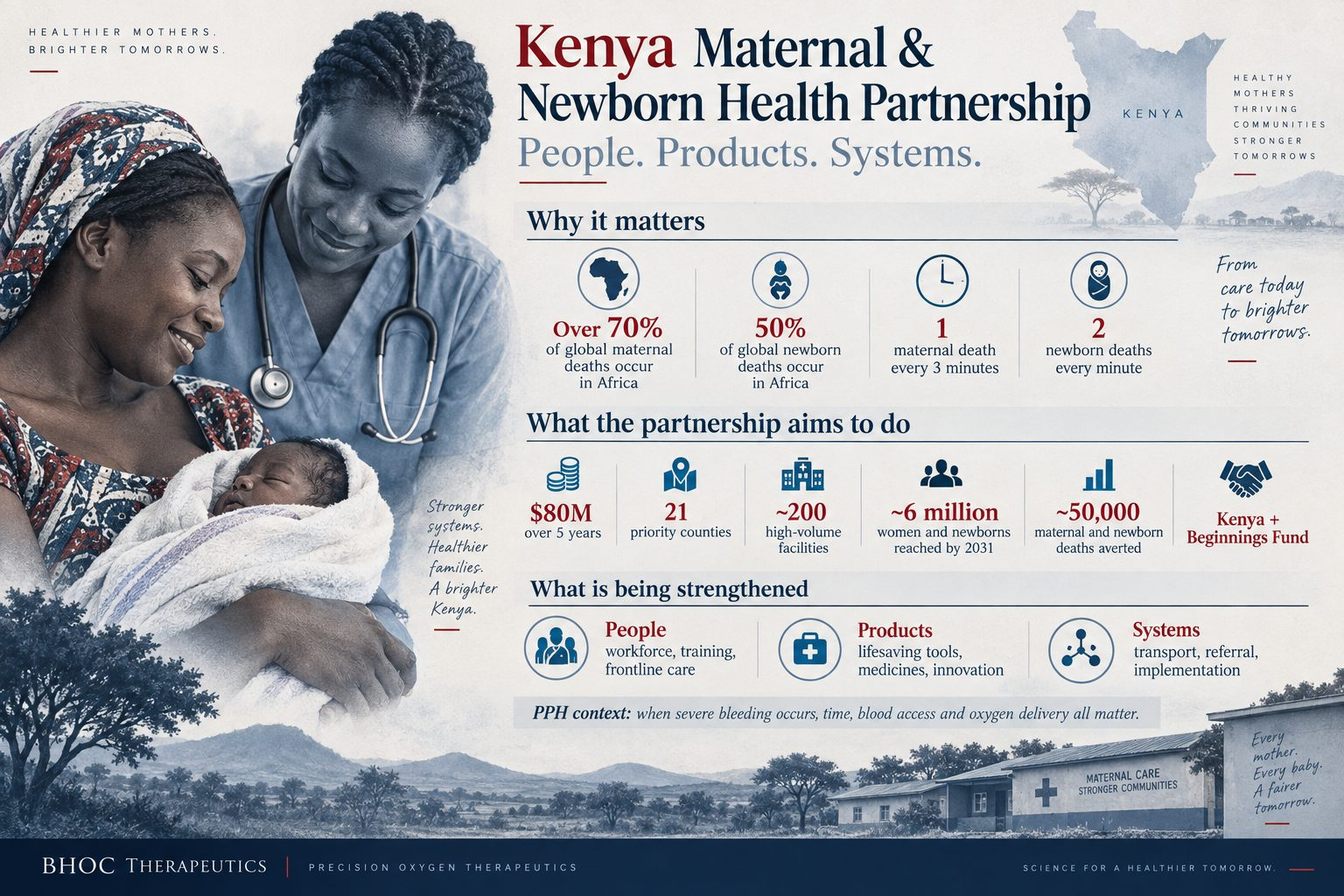
Why this matters for PPH
The Kenya Ministry of Health reports that the cooperation framework unlocks USD 80 million over five years to support maternal and newborn health reforms across 21 high-burden counties and nearly 200 high-volume facilities, with close to six million women and newborns expected to benefit.
The Beginnings Fund describes its approach as investment in People, Products and Systems: strengthening the maternal and newborn workforce, scaling high-impact products and medicines, and strengthening critical systems such as data, emergency transport and referral networks.
Alice Kang’ethe and an implementation architecture built around scale
Alice Kang’ethe, MSc is CEO of the Beginnings Fund. The Fund's official materials describe a Nairobi-based investment team working with governments, maternal and newborn health specialists and implementation partners to develop country plans aligned with national priorities.
This is especially relevant to BHOC because the Fund's published materials already identify postpartum hemorrhage among the problems addressed through bundled products and clinical interventions. The opportunity is therefore not to reframe maternal care around a new technology, but to ask whether future oxygen-delivery tools could complement established PPH pathways where blood access, transport or definitive care is delayed.
PPH: bleeding control first, oxygen-delivery risk in parallel
WHO, FIGO and ICM consolidated PPH guidance emphasizes evidence-based prevention, rapid diagnosis and treatment across the continuum of care. The 2026 implementation guide extends this into country adaptation, stakeholder engagement, procurement, distribution, workforce capacity and humanitarian settings.
Large-scale African evidence also shows the impact of organized early response. The E-MOTIVE randomized trial evaluated early detection plus a bundled first-response treatment strategy for postpartum hemorrhage across hospitals in Kenya, Nigeria, South Africa and Tanzania.
Within this established treatment framework, the BHOC research question is narrower: during severe hemorrhage, can a future oxygen-delivery therapeutic help support tissue oxygen delivery during the critical interval before definitive control, transfusion or advanced care is available?
The internal BHOC PPH evidence node
From People + Products + Systems to a testable research question
The Beginnings Fund's model is useful because it avoids treating innovation as a stand-alone product problem. For maternal emergencies, technology only matters when trained people can use it, procurement can sustain it, referral networks can escalate care, and the intervention fits national clinical pathways.
BHOC therefore sees the Kenya initiative as a relevant model for future dialogue with African governments, maternal-health programmes, clinical centres, implementation organizations and philanthropic partners interested in evaluating new approaches to emergency oxygen delivery.
The shared objective is straightforward: more mothers surviving childbirth, wherever they live.