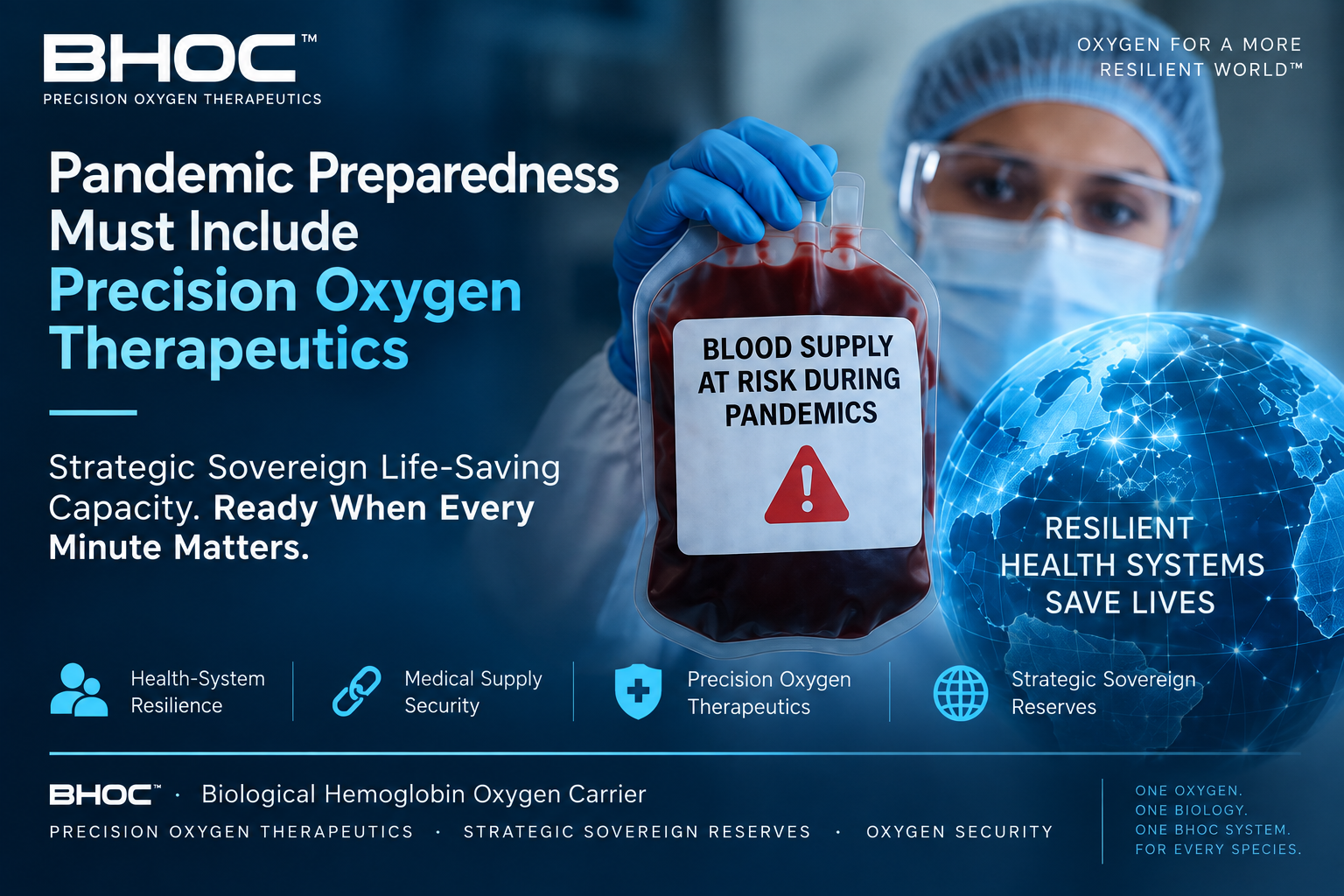
Why blood-supply resilience belongs in preparedness
On 25 September 2026, world leaders renewed their commitment to pandemic prevention, preparedness and response, emphasizing resilient health systems, equitable access to therapeutics and essential medical supplies, stronger supply chains, and geographically diversified local manufacturing.
The 2025 World Health Assembly adoption of the WHO Pandemic Agreement provides earlier policy context: WHO described equitable access to vaccines, therapeutics and diagnostics and work toward a Global Supply Chain and Logistics Network. The Agreement does not name BHOC or establish a role for hemoglobin oxygen carriers.
Pandemics and major infectious-disease outbreaks can place pressure on another critical healthcare resource: the blood supply. WHO guidance recognizes threats to blood sufficiency and safety during infectious-disease outbreaks, while emergency guidance identifies donor shortages and disruption of critical materials and equipment as causes of reduced blood availability. Trauma, postpartum hemorrhage, emergency surgery and other conditions requiring oxygen-carrying support do not stop.
BHOC perspective
BHOC is developing the concept of Precision Oxygen Therapeutics based on Biological Hemoglobin Oxygen Carriers (BHOC) around a longer-term objective: shelf-stable oxygen-delivery technology that could reduce dependence on continuous donor availability and provide an additional option when conventional blood supply is delayed, constrained or unavailable.
A sufficiently validated oxygen therapeutic could also create a strategic capability: a Strategic Sovereign Reserve of oxygen-delivery capacity, maintained in advance and available when routine blood-supply systems are disrupted or overwhelmed.
The objective is not to replace donor blood or national blood systems. Blood and blood components remain essential medicines. The objective is resilience.
Precision Oxygen Therapeutics · Strategic Sovereign Reserve · Oxygen Security.
We believe future pandemic and emergency-preparedness strategies should evaluate oxygen therapeutics as a distinct therapeutic class, including their potential role in strategic reserves and emergency medical supply systems.
Read the contextual evidence
Strategic Stockpiles, Local Manufacturing and Oxygen-Delivery Resilience →