A research agreement shaped by the need for timely oxygen delivery
On 4 March 2003, the U.S. Naval Medical Research Center and Biopure entered a Cooperative Research and Development Agreement (CRADA) for the RESUS program, “Restore Effective SUrvival in Shock.” The agreement was identified as NCRADA-NMRC-03-1497. The BHOC historical evidence record connects this agreement with the earlier Army research context, funding disclosures and subsequent proposed protocols.
The practical problem was clear: blood storage, transport and availability can constrain trauma care close to the point of injury. Research on Hemopure (HBOC-201) examined whether an extracellular hemoglobin oxygen carrier could help address that interval. A research program establishes the question being investigated; its clinical conclusions depend on the specific studies and their results.
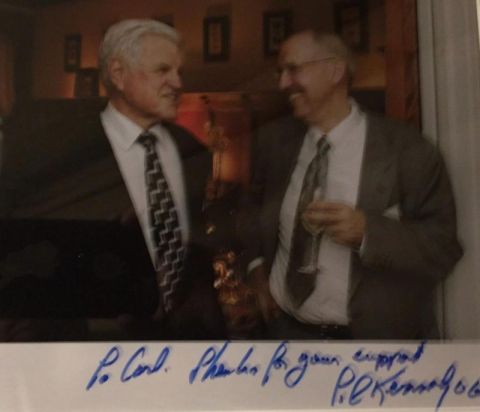
Senator Edward M. Kennedy and Carl W. Rausch
The original BHOC LinkedIn publication recalls Senator Edward M. Kennedy's support during Biopure's development years. Its historical photograph shows Kennedy alongside Carl W. Rausch and preserves a handwritten dedication. It is part of the people and institutional history surrounding the development of oxygen therapeutics.
The photograph and the contractual record serve different purposes. The photograph preserves a personal historical connection. The research agreement documents the organizations, objectives and responsibilities of the Navy-Biopure collaboration.
What this history contributes to BHOC today
The continuing question is how to support oxygen delivery when appropriate donor blood is delayed or unavailable. BHOC, Biological Hemoglobin Oxygen Carrier, places that function within Precision Oxygen Therapeutics, with attention to perfusion, microcirculation and measurable tissue response.
Historical knowledge is useful when it informs the next research question. BHOC invites discussion of cooperative research and development with partners interested in product characterization, oxygen-delivery measurements and clearly defined clinical or preclinical research settings.
Key questions
What was the Navy-Biopure RESUS CRADA?
It was a Cooperative Research and Development Agreement between the U.S. Naval Medical Research Center and Biopure, dated 4 March 2003 and identified as NCRADA-NMRC-03-1497, for the RESUS research program.
What is Senator Edward M. Kennedy's connection to this archive?
The BHOC LinkedIn publication recalls his support during Biopure's development years and shares a historical photograph of Kennedy with Carl W. Rausch.
Does a historical CRADA establish approval of BHOC?
No. It documents a historical research collaboration. Regulatory status and clinical performance must be assessed for the particular product, indication and evidence.