Medical readiness for large-scale combat operations must account for sustained casualties, delayed evacuation and oxygen delivery before definitive care.
A 2026 article by Benjamin J. Hazen, Brian P. Staak and John B. Holcomb examines wartime blood supply and proposes a structured walking wounded blood bank. It reports approximately 53,000 U.S. wounded in action over two decades of Iraq and Afghanistan. Separately, JAMA discusses scenarios with 9,500-100,000 U.S. wounded and injured in the first 100 days of a Taiwan conflict.
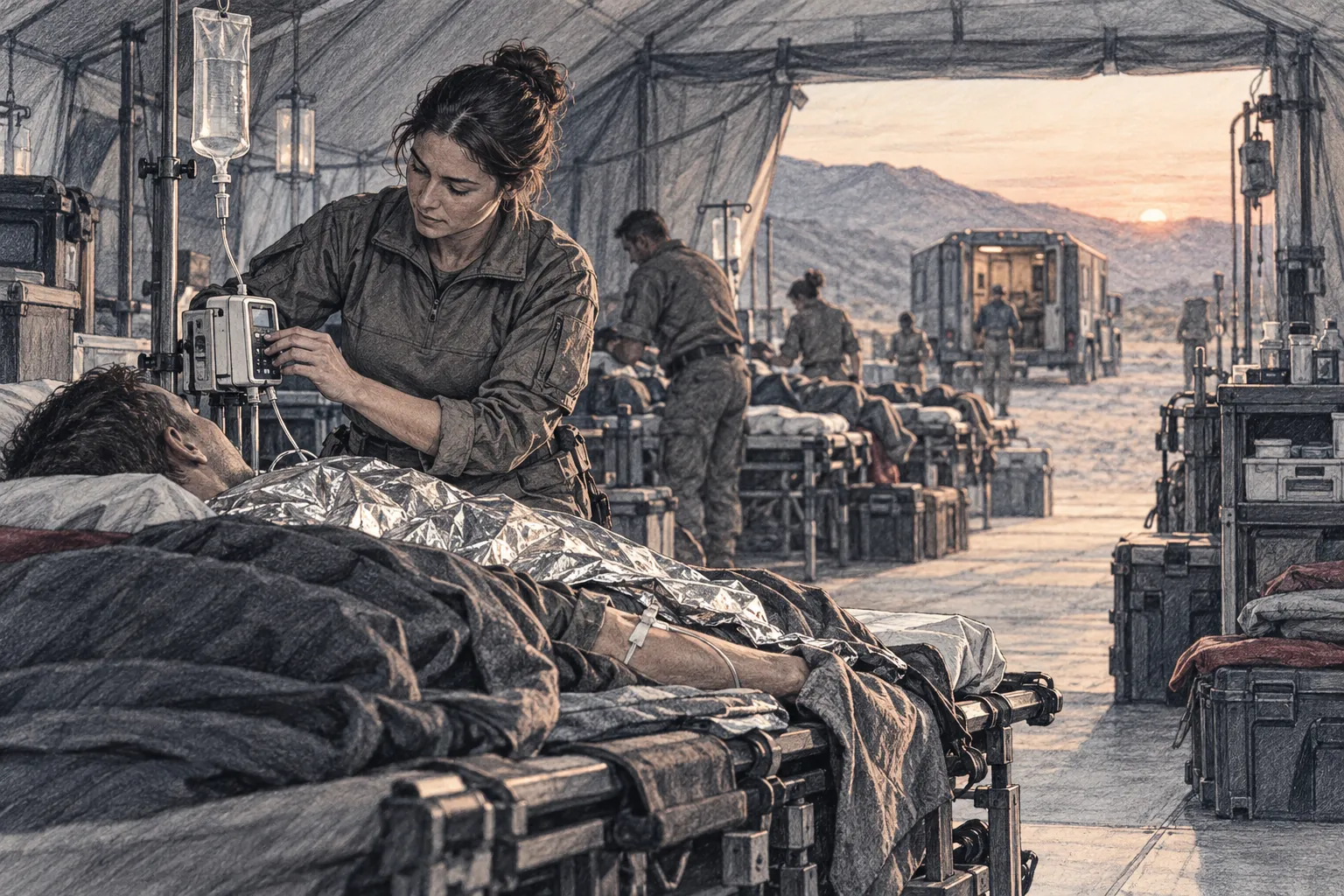
What the daily figures mean
The 3,600-per-day planning figure cited in Parameters includes killed, wounded, disease and non-battle injuries. Approximately 800 per day refers to personnel replacement requirements in the underlying military planning discussion.
The BHOC development focus
BHOC, Biological Hemoglobin Oxygen Carrier, focuses on oxygen delivery within Precision Oxygen Therapeutics. The development requirements for prolonged care include a ready-to-use presentation, practical storage, compact cartridges and controlled administration during patient movement.
The Military & Disaster Medicine analysis provides the comparison, definitions, source links and answers to common LSCO questions.